 |
Property Makler
Advanced analytics for residential real estate investing |
|
Dubai, UAE US |
Dubai US Market Research
Dubai apartments sales trends, May 2024 - corrections in some areas
06 Jun 2024
As of May 2024, the Dubai residential apartment market exhibits a diverse landscape of trends and developments across various neighborhoods. Analyzing the data reveals several key insights into price movements, market dynamics, and areas of growth.
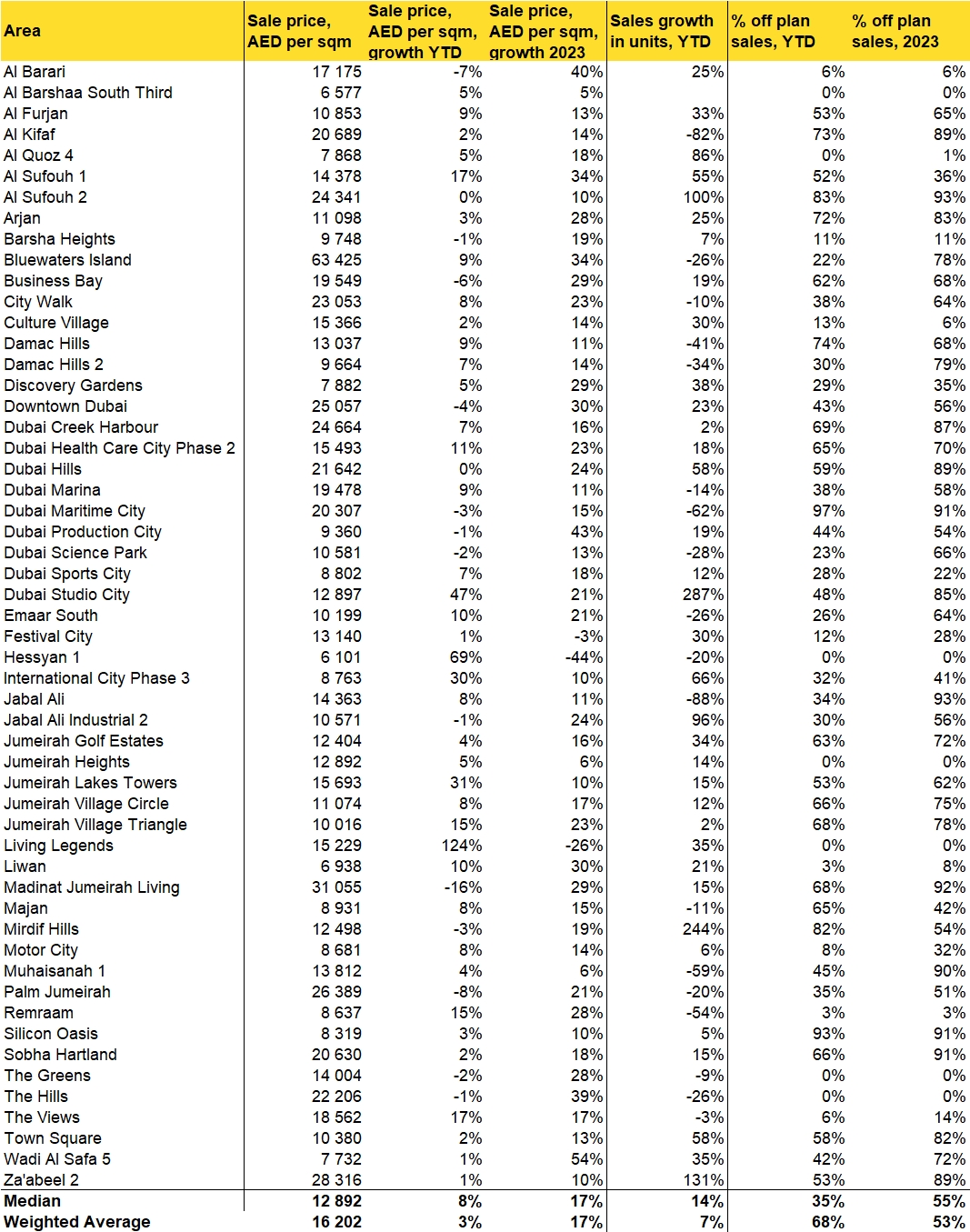
One noticeable trend is the differential performance in sale prices across different areas. Neighborhoods such as Dubai Studio City and Living Legends have seen substantial year-to-date increases of 47% and 124% respectively in sale prices. These spikes reflect heightened investor interest and demand, likely driven by unique factors such as new infrastructure developments or shifts in lifestyle preferences. Conversely, areas like Palm Jumeirah and Madinat Jumeirah Living have experienced declines of -8% and -16% respectively, indicating challenges or corrections in these markets, possibly influenced by oversupply or market saturation.
The overall median sale price for Dubai apartments stands at AED 12,895 per square meter, with an 8% increase year-to-date. This growth underscores a resilient market adapting to evolving economic conditions and investor sentiment. Furthermore, the annual growth rate in 2023 was notably robust at 17%, suggesting sustained momentum in property values despite global uncertainties and regional market fluctuations.
Sales growth in terms of units sold provides another dimension to the market's health. Areas like Dubai Studio City and International City Phase 3 have seen impressive unit sales growth of 287% and 66% respectively, indicating strong market activity and investor confidence. On the other hand, some areas have experienced declines in unit sales, highlighting localized challenges or shifts in buyer preferences.
The data also reveals varying degrees of price sensitivity among neighborhoods. For instance, while some areas like Hessyan 1 saw staggering price hikes of 69% year-to-date, others like Al Barari witnessed a decline of -7%. These fluctuations are influenced by factors such as location appeal, infrastructure development, and market niche, illustrating the complexity of Dubai's real estate landscape.
Key Trends by Area
- Stable Growth in Established Areas: Established areas such as Downtown Dubai, Dubai Marina, and Jumeirah Lakes Towers continue to attract steady demand. Despite slight fluctuations, these locations benefit from robust infrastructure and amenities, supporting consistent property values.
- Emerging Neighborhoods and Specialized Zones: Emerging neighborhoods like Dubai Studio City and Business Bay show significant growth, with some areas experiencing dramatic year-over-year increases. Investors are drawn to these regions due to planned developments and strategic positioning within Dubai's evolving urban landscape.
- Luxury Segment Dynamics: Luxury segments, exemplified by locales like Palm Jumeirah and Bluewaters Island, have shown varied performance. While some areas have seen price corrections, others continue to command premium prices, influenced by exclusivity and waterfront living appeals.
- Suburban and Mixed-Use Developments: Developments catering to family-centric lifestyles, such as Town Square and Damac Hills, remain popular due to affordable pricing and integrated community amenities. These areas are likely to witness sustained demand, supported by growing interest from local and expatriate families.
Share of Off plan sales increased to 63%
The share of off-plan sales in the Dubai residential apartments market shows interesting trends based on the statistics for YTD May 2024 compared to 2023. Off-plan sales refer to properties sold before they are constructed or completed, often at a lower price due to the risk associated with future delivery and potential changes in market conditions.Here's a breakdown of the trends observed:
- Overall Increase in Off-Plan Sales Share: The weighted average across all areas indicates a significant increase in the share of off-plan sales from 53% in 2023 to 68% in May 2024. This indicates a growing preference among buyers towards investing in properties before their completion, possibly driven by attractive pricing and payment plans offered by developers.
- Varied Trends Across Different Areas:
- High Off-Plan Sales Areas: Certain areas such as Dubai Hills (59% to 89%), Dubai Creek Harbour (69% to 87%), and Dubai Marina (38% to 58%) show a substantial increase in off-plan sales share. These areas likely benefit from ongoing development projects and robust marketing strategies by developers to attract early investors.
- Decreasing Off-Plan Sales: Some areas, despite still having a high percentage of off-plan sales, show a decrease or stagnation in their share from 2023. For instance, Jumeirah Golf Estates (from 72% to 63%) and Business Bay (from 68% to 62%) indicate a potential shift where completed or near-completion properties might be gaining preference over off-plan purchases.
- Impact of Market Conditions: The fluctuation in off-plan sales shares can also be influenced by market conditions, regulatory changes, and buyer sentiment. For example, economic stability, attractive payment plans, and developer credibility play crucial roles in boosting off-plan sales, while market uncertainties or delays in project deliveries can lead to cautious buyer behavior.
- Sector-Specific Insights:
- Luxury and Emerging Areas: Luxury segments like Bluewaters Island and emerging areas like Dubai Science Park (from 66% to 23%) and Meydan (from 64% to 26%) demonstrate varied responses to off-plan offerings, reflecting diverse buyer preferences and market dynamics.
- Affordable Housing: Affordable housing areas like International City Phase 3 (from 41% to 32%) and Liwan (from 8% to 3%) may show higher off-plan sales due to lower entry costs and investor interest in potential rental yields.
Challenges and Considerations
Despite the overall positive outlook, challenges persist, including global economic uncertainties and regulatory changes impacting investor sentiment. Fluctuations in oil prices and geopolitical developments also pose potential risks to market stability.Outlook Until Year-End
Looking ahead to the end of 2024, the Dubai apartment sales market is expected to continue its upward trajectory, albeit at a moderated pace. Strategic investments in infrastructure, Expo 2020 legacy effects, and government initiatives aimed at enhancing affordability and ease of doing business are likely to bolster market confidence.Several areas stand out as potential growth hotspots based on their recent performance and market indicators. Dubai Studio City's rapid price appreciation coupled with significant unit sales growth suggests it remains a focal point for investors. Similarly, Jumeirah Lakes Towers and Living Legends, with their solid price increases and robust sales growth, present opportunities for both capital appreciation and rental yield.
Upcoming events and changes on Dubai real estate market will continue to attract new buyers
- Large-scale exhibitions and conferences: Dubai frequently hosts prestigious events that attract international attention. These can include trade shows, investment expos, or industry conferences. Events like the Invest World Expo 2024 could potentially bring in high-net-worth individuals interested in Dubai's investment opportunities, including real estate.
- Real estate expos: Specialized real estate expos create a platform for developers and investors to connect. These events showcase new properties and investment opportunities, potentially attracting new buyers to the Dubai market.
- Completion of major development projects: The completion of high-profile projects like the Dubai Creek Harbour can create a buzz and attract interest in specific areas or types of properties. This can lead to increased demand and potentially higher prices in those areas.
- Infrastructure Projects: Dubai's continuous investment in infrastructure projects, such as the expansion of transportation networks, development of new districts like Dubai South, and enhancements in connectivity (e.g., Dubai Metro expansions, new highways), will boost the attractiveness of various real estate projects across the city. Improved infrastructure often correlates with increased property values and buyer interest.
- Regulatory Reforms: Ongoing regulatory reforms aimed at enhancing investor confidence and transparency in the real estate sector are expected to positively impact buyer sentiment. Measures such as extended visas for retirees and long-term residents, incentives for investors, and streamlined processes for property transactions contribute to a favorable investment environment.
- Technological Advancements: Dubai's commitment to becoming a smart city with advanced technological infrastructure, including smart homes and digital services, enhances the appeal of its real estate offerings. Buyers seeking modern living solutions are drawn to developments that integrate technology for convenience, security, and energy efficiency.
- Economic Growth and Stability: Dubai's economic recovery post-pandemic, driven by sectors such as tourism, trade, and finance, provides a stable foundation for real estate investment. Positive economic indicators, including GDP growth and employment stability, tend to bolster buyer confidence in property markets.
While challenges remain, Dubai's residential apartment market presents promising opportunities for investors looking to capitalize on the city's dynamic growth and strategic vision for sustainable urban development. Dubai residential apartments market showcases resilience and potential for growth in 2024. At the same time investors are advised to navigate cautiously, considering localized factors and macroeconomic trends influencing each neighborhood's dynamics. Understanding these nuances will be crucial for making informed investment decisions in Dubai's ever-evolving real estate sector.
Note: YTD is year to date (January – May 2024)
Tags: Sales Prices
Property Makler © 2026 Contacts T&C About